
When the Bones Fall Out
Conversation about the way they exhale at me

Some women drop their bones at your feet
as if you’re already kneeling.
It’s the pause after “Can I Tell You Something?”
Listening once meant staying alive.
My pen will never be their confessional.
There’s a particular type of exhale that annoys me. It starts with their breath and then that awkward pause after, “Can I tell you something?” The way their shoulders relax as if I’ve already granted them my “Yes,” and as if my consent was never required. It’s the assumption that I’m available to listen to whatever they want to share. Sometimes they don’t even ask if I want to listen. They just proceed with unburdening themselves and letting the bones spill from their mouths, unsolicited. I think to myself: How dare you. What made you think I was open?
There’s always something inappropriate, unfiltered, and a little manipulative about what’s being handed to me. The bones are rarely small. They’re marriages, divorces, diagnoses, resentments, guilt, and confessions disguised as growth. They’re bones meant for a friend, sister, or therapist, not a stranger on a plane.
They don’t exhale like this with everybody. They target me with extraordinary precision, as if emotional access to me is some inherited knowledge. They expect emotional validation from me specifically because historically I was required to provide it. This isn’t an expectation that began with my generation.
They attempt to invite themselves into my body in airports, the office, restaurants, stores, and anywhere that close proximity is mistaken for an invitation. And when it happens, I feel my body tighten before I even understand why. The reaction in my body isn’t empathy, and it feels like something older. The idea that I must somehow look available or that they feel entitled to my emotional space is very revealing.
This exhale has a smell, a look, and a cadence that my body recognizes; it doesn’t feel new. It instantly shifts my energy and my face goes blank. It transports me to another time and place.

That time and place is back when listening was once a matter of life or death.
Listening meant strategic survival in plantation houses across the southern United States. But the plantation house wasn’t only southern. It stretched through the cane fields in Barbados and Jamaica², coffee estates in Brazil, and wherever colonial domestic regimes created closeness as access and enforced it by law.
Proximity wasn’t accidental. As Stephanie E. Jones-Rogers wrote in They Were Her Property, white southern girls were raised alongside the enslaved girls their parents gave them, which cultivated “relationships of control and, sometimes, love.”³ It was the power and ownership that was granted to them that made forced closeness possible.
Reading first-hand journal entries from 1860–1865 of white women recording their access to our emotional space, you can feel their words are laced with entitlement, audacity, and insecurity.
“I talked to her for a long time. She listened as she always does, with her eyes on the floor. I wonder sometimes if she hates me for it, or if she simply does not care.”— Ella Gertrude Clanton Thomas, 1865.⁴
“She stood like a statue… I could not tell what she thought… Their silence is what is so terrible.”— Mary Boykin Chesnut, 1905.⁵
Their stillness and unreadability meant staying alive. And the person holding them captive was irritated by that stillness and unreadability.
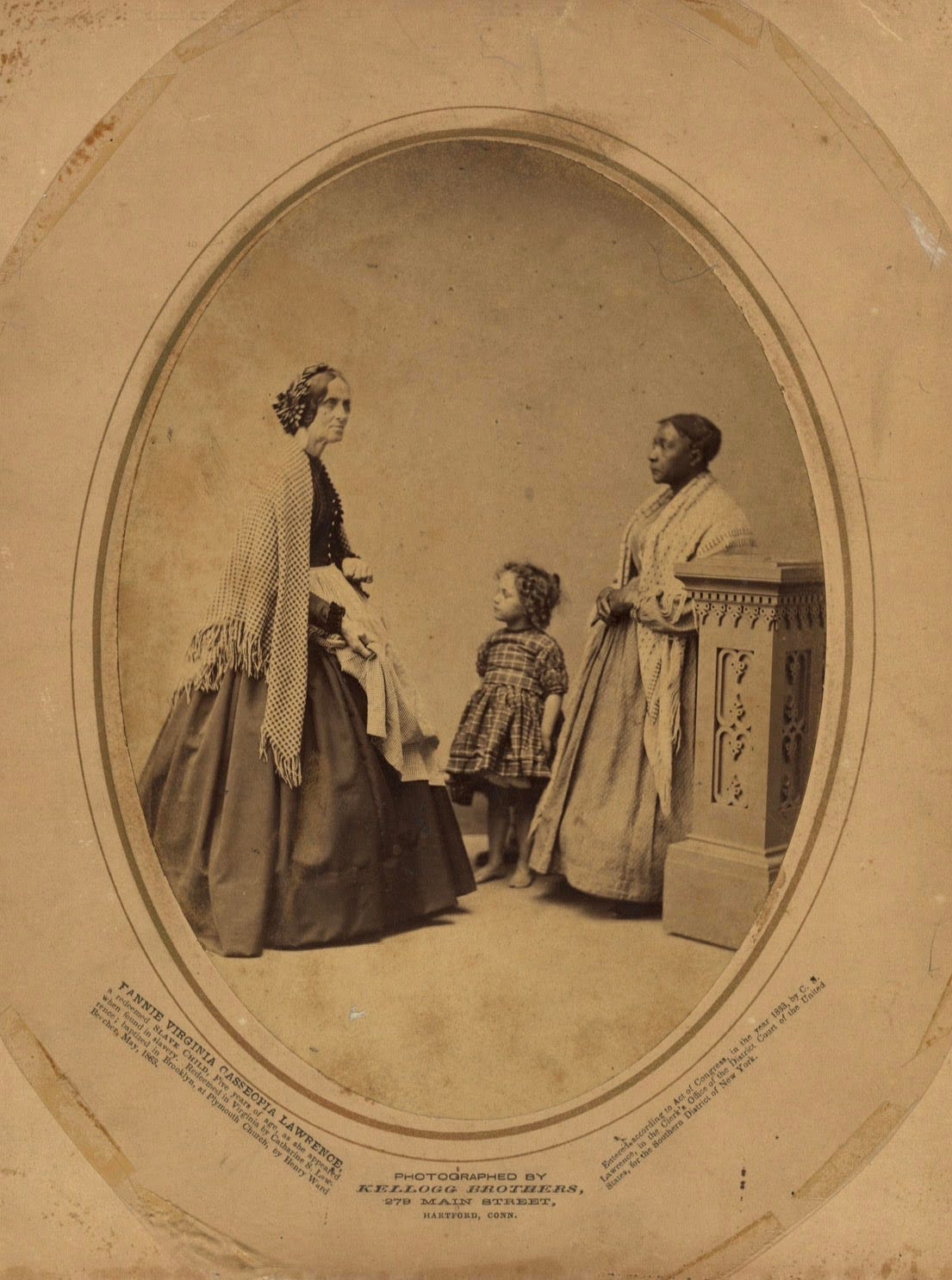
But their non-responsiveness wasn’t the emptiness white women thought it was. They were strategic in ways they couldn’t recognize. Their listening didn’t mean surrender; it meant they were strategizing on staying alive.
We see evidence of subtle resistance to white women’s invasiveness and brutal words throughout the WPA Slave Narratives. These were disciplined rebellions disguised as obedience.⁷
The “stupid” mask.
Playing confused to shorten the lecture.The stone face mask.
No tears, no argument, and no eye contact.
Denying her the satisfaction of reaction.The non-response.
“Yes, ma’am.” “No, ma’am.”
Just enough to avoid punishment, but not enough to offer access.Intelligence gathering.
Memorizing names, plans, and legal matters.
Information taken back to the quarters.Double speech.
It sounded like obedience on the surface, but it meant something else.
The stone face mask was an invisible boundary without explanation. The mask was their way of holding the line without surrendering. It denied white woman the satisfaction of being emotionally validated. It withheld interior access while appearing to be compliant. So, what looked like submission was actually strategy, and what looked like unreadability was self-possession.

Self-possession said:
I’m not your confessional.
I’m not your mammy.
I’m not here to nurse your guilt or cradle you like a baby from the things you refuse to be accountable for.
White women were raised in a world where we listened and stabilized. The script and ideology never disappeared: We’re safe to confess to because we’re not seen as fragile, not seen as competition, and because they think we can somehow relate to their chaos, low habits, and dysfunction.
Why?
It’s because we’re seen as stable ground in those moments when white women feel unstable. We’re not magically unscarred or exempt from chaos, but historically we were positioned as the emotional infrastructure of their households. So, when they’re spiraling out of control, they turn to us, not as equals, but as emotional containers to offload their dysfunction. That’s the insult.
Which is why small, strategic acts of rebellion mattered. The strategies worked to preserve dignity under constant surveillance and scrutiny. But strategies sustained too long start to look like personality.
What started as survival under coercion doesn’t disappear when the law changes. It travels and it leaves residue. And that residue looks like composure to people who don’t know its origin. The stony face mask didn’t disappear; it traveled.
When someone treats you like permission is optional, it activates something older within you. It can trigger memories of your emotional space being accessed before you had control over it. For some of us, other people’s bones falling out feel like an obligation to respond, a reenactment of earlier invasions of our space, or reminders of how we learned to listen without ever being asked to.
Listening without being asked taught us to read the room because our safety depended on it. Our perceptiveness, awareness, and patience look like virtues now, but they started as learning how to avoid being harmed and how to live without the luxury of innocence. We didn’t lose our innocence by accident. There was a system that required that loss too.
But what feels personal now was once the law. Listening was enforced by power.
The women who came before me perfected the stone face mask under coercion. I don’t have to wear it.
They listened so that I could ignore.
Until the next conversation.
—Taia
R.O.S.E Continuum
From the Archive:
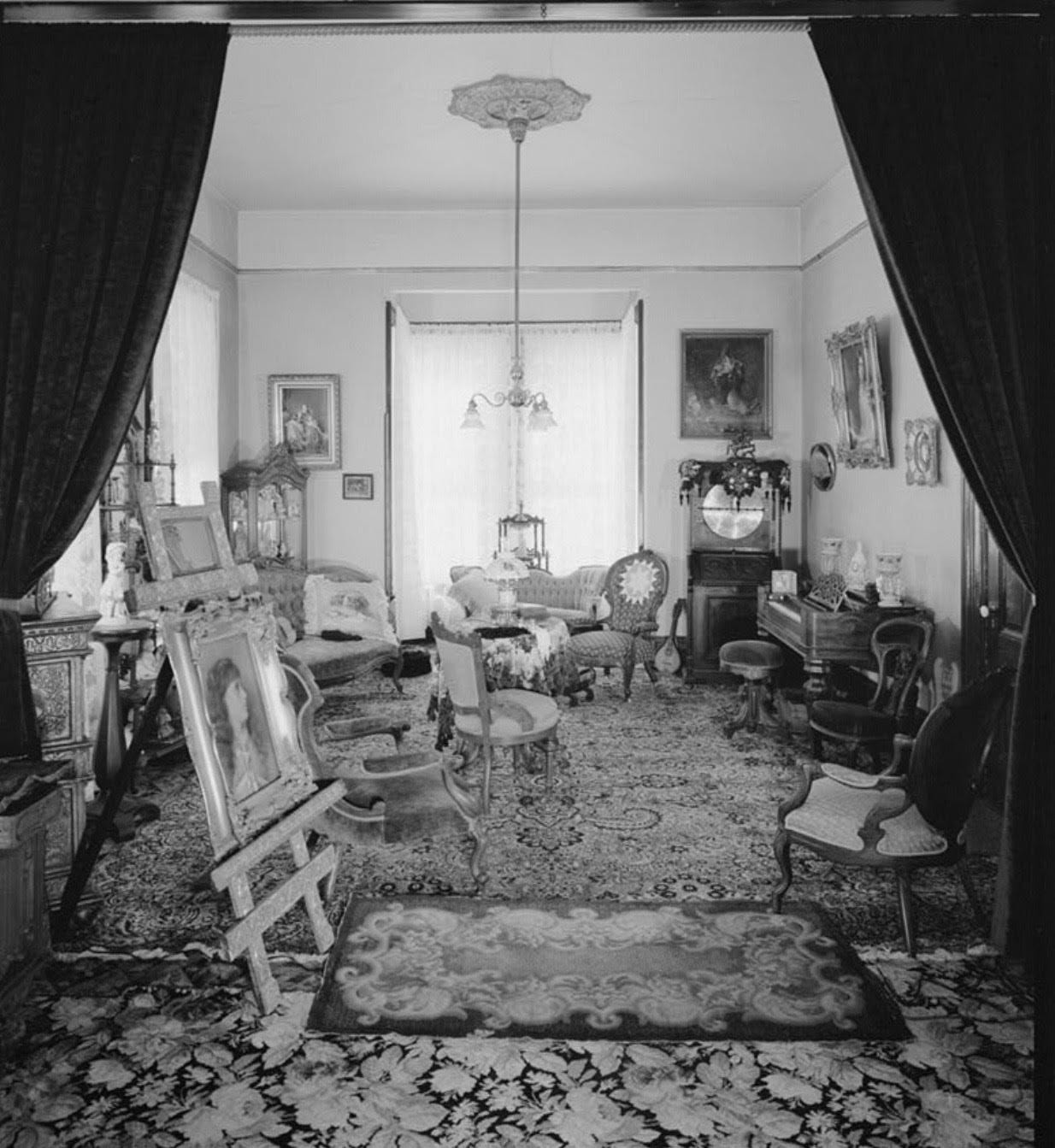
A room where their faces had to stay still. Nothing in this room is accidental, especially not the enforced listening. Every room had a function, and her body was one of them.
Reading With:
They Were Her Property by Stephanie Jones-Rogers
Sonic Companion:
“Like a Tattoo” by Sade
Confession energy.
“Cranes in the Sky” by Solange
Interior containment.
One is someone unloading.
One is someone who had to contain it.
Archival Notes & Sources
1 Brenda Sykes, photo, c. 1970s.
Photographer unknown.
2 Early Caribbean slave codes, including An
Act for the Better Ordering and Governing of
Negroes and Slaves—enacted in Barbados
(1661) and enacted in Jamaica (1664). Legal
codification of enslaved people as chattel
and subjects of compulsory obedience.
3 Stephanie E. Jones-Rogers, They Were Her
Property (2019).
4 Ella Gertrude Clanton Thomas, Journal Entry (1865).
5 Mary Boykin Chesnut, A Diary from Dixie (1905).
6 Kellogg Brothers, Fannie Virginia Casseopia
Lawrence, 1863. Library of Congress. Public
domain.
7 Federal Writers’ Project, Slave Narratives
(1936–1938). Library of Congress.
8 Photograph taken in the South (mid-1980s) by Baldwin Lee.
9 Historic American Buildings Survey (HABS NEV-13-15),
Library of Congress. Public domain.
This is an amazing piece!
Reading this felt like someone naming something my body has known for a long time. The way you talked about people assuming access—how they just unload on you without asking—it hit me in a really familiar place. I know that instinctive tightening you described. I’ve felt it before I even have the words for why.
As I’ve done my own ancestral healing, I’ve started to understand that these reactions aren’t random. That blank face, that distance, that automatic “shut the door” feeling—those didn’t start with me. They were passed down. They were survival skills for the women who came before us, and their stories still live in our nervous systems.
Your words reminded me how easily those old patterns get activated. Someone crosses a boundary in the present, and suddenly my body is responding to something much older. It’s not just annoyance—it’s memory.
What really stayed with me was how you described that stone‑face mask as strategy. That’s exactly how I’ve come to see so many of my own reactions. What used to look like calm or strength was actually protection…and sometimes still is. I’m learning to tell the difference.
And girl, when you talked about being treated like an emotional container—whew. That hit hard. I’ve experienced that all too well and it’s exhausting in a way that’s hard to explain unless someone has lived it. You captured it a way that made me feel understood.
This article was so grounding. The reminder that our ancestors held so much so that we could have more choice now, that made me pause and breathe.
Your piece connected so closely to my own healing work. It helped me understand my reactions with more compassion, and it reminded me that none of this is random. It’s history. It’s lineage. And it’s something I’m actively learning to move through. Thanks for writing this.